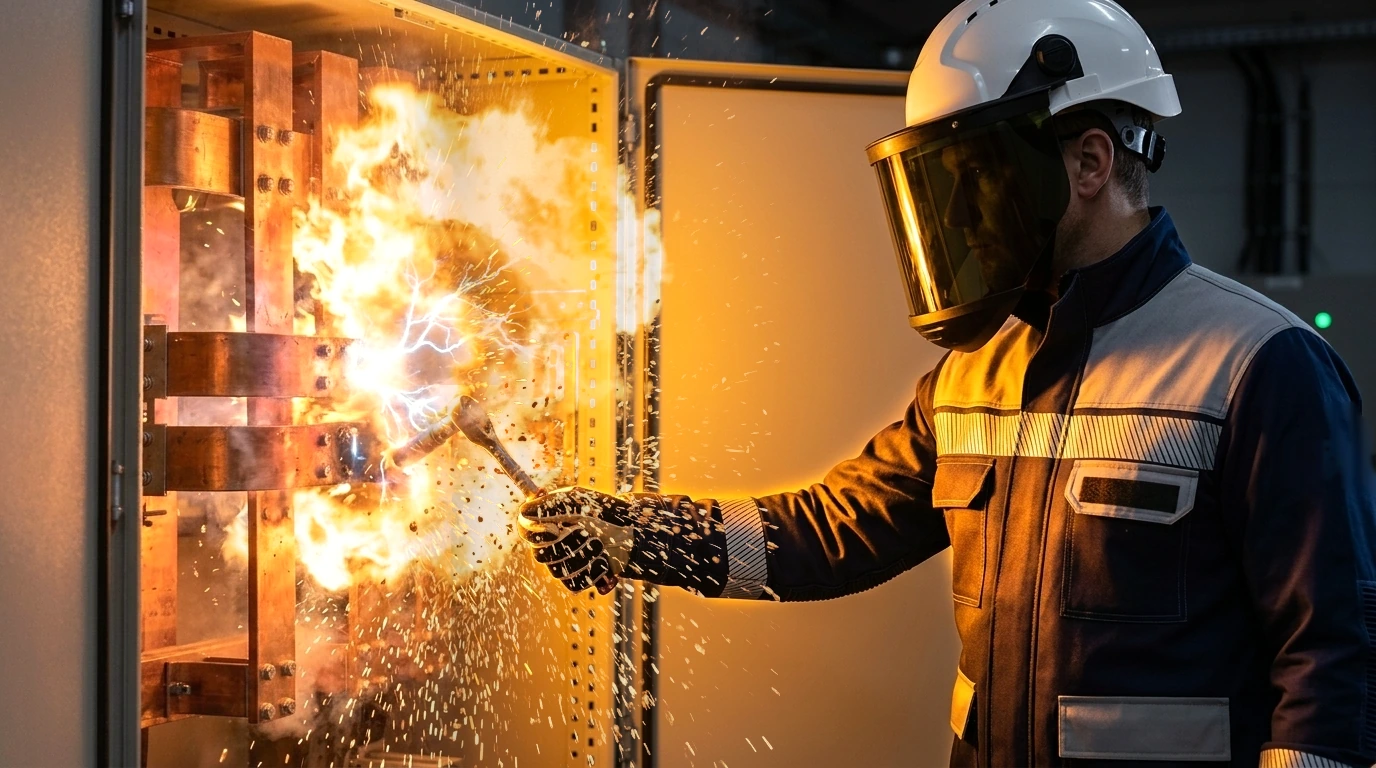
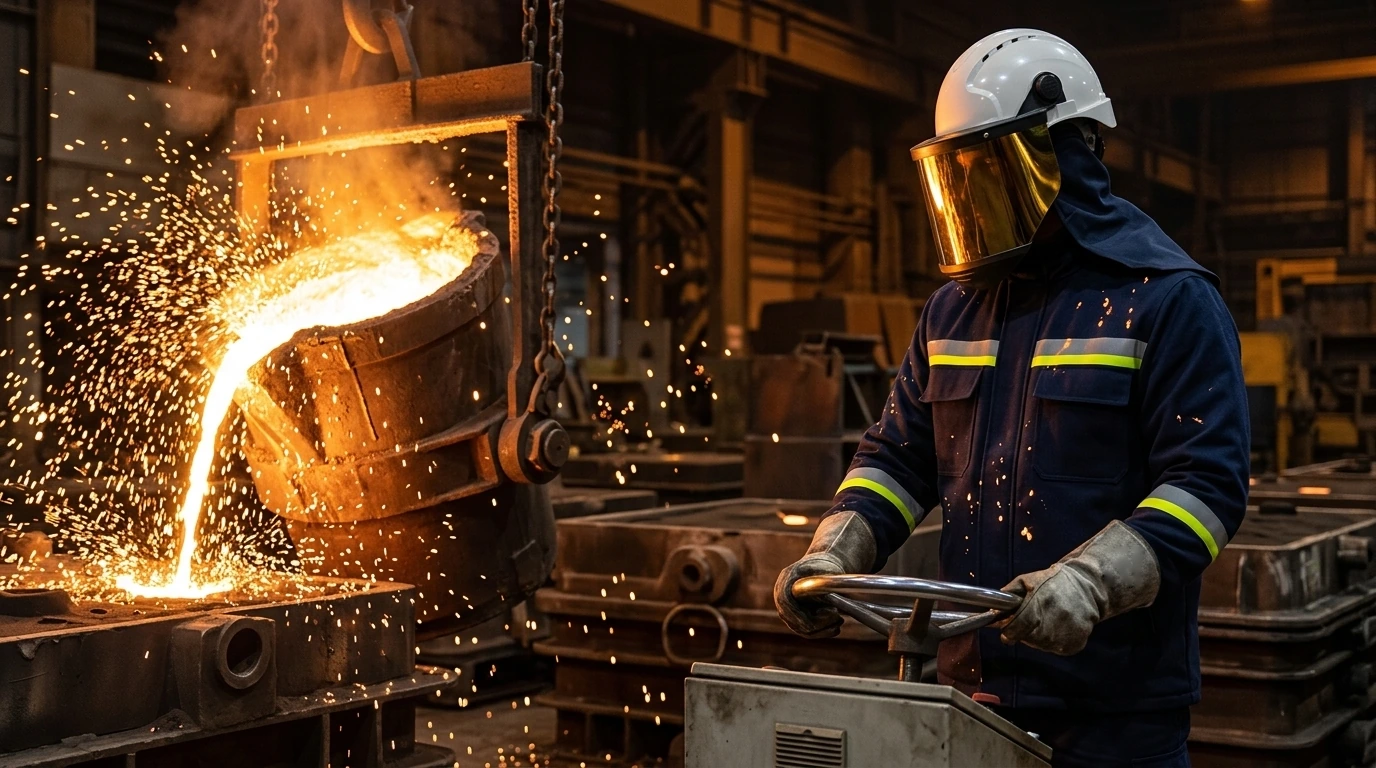
Metal smelting plants, aluminum extrusion lines, and pig iron foundries are the most extreme thermal working environments in heavy industry. While liquid aluminum flows like water at 750–800°C, molten iron and steel in ladles reach 1400–1550°C.
During casting operations, moisture entering a ladle, slag skimming, or a minor eruption during furnace charging can project tens of cubic centimeters of incandescent liquid metal across the shop floor. At that critical millisecond, the fabric technology of the operator's garment determines the difference between a harmless startle and a life-threatening injury.
1. The Surprising Material Reality: Why Are Aramid Fabrics Disastrous Against Aluminum?
In industrial fire and electric arc flash applications, meta-aramid and para-aramid (Nomex®, Kevlar®) fabrics are widely recognized as the gold standard. Relying on that reputation, many foundry managers purchase aramid garments. However, in a molten metal foundry, this is a fatal mistake!
Although aluminum melts at a lower temperature than iron (780°C vs. 1400°C), its specific heat capacity (cp = 1.08 J/g·K vs. 0.82 J/g·K; +32%), latent heat of fusion (ΔHf = 397 J/g vs. 247 J/g; +61%), and liquid thermal conductivity (~94 W/m·K) make it thermally lethal per gram. Liquid molten aluminum wets and spreads across aramid fibers, becomes trapped in fabric pores, fails to run off, and burns through from within—inflicting deep 3rd- and 4th-degree necrotic burns. Aramid fibers must never be used on outer shells against molten aluminum!
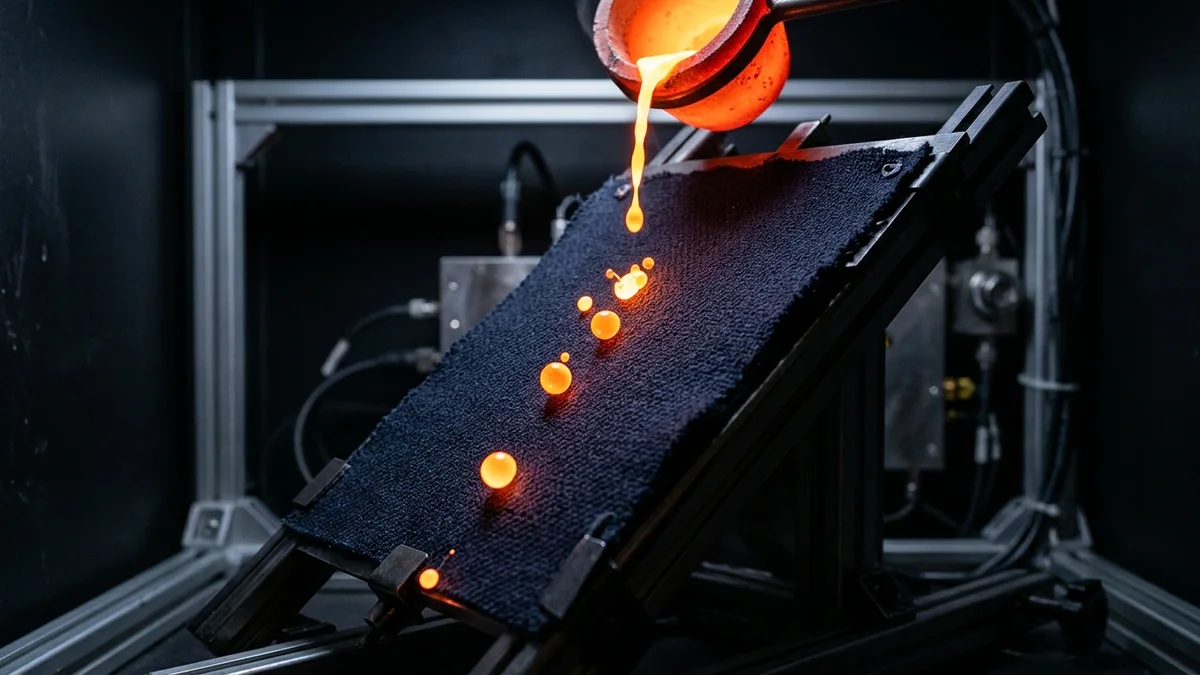
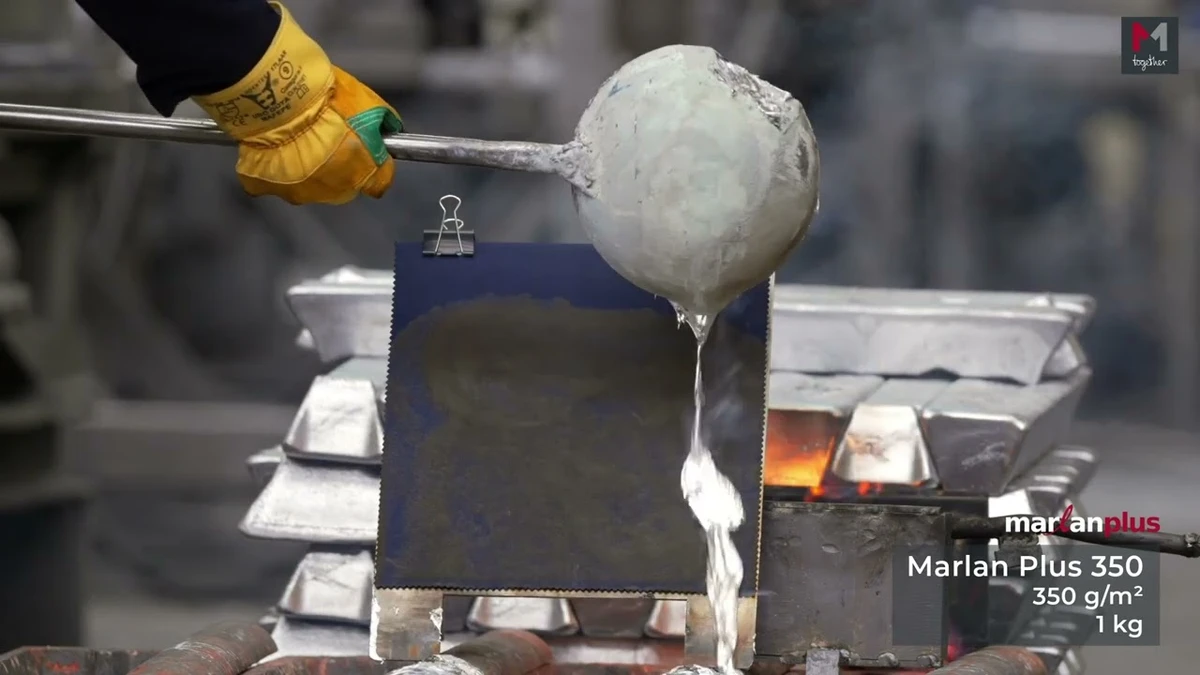
What is required against liquid metal is not merely that the fabric resists catching fire, but that molten metal cannot adhere to the fabric surface and immediately rolls off to the ground like water droplets.
2. ISO 9185 Test Standard: How Are Classes D and E Measured?
The sole internationally recognized standard measuring the resistance of personal protective clothing to molten metal splash is EN ISO 9185:2007 (and EN ISO 11612 Code D & E).
In the laboratory test apparatus, the fabric specimen is mounted at a 45° angle. Directly behind the fabric, a specialized embossed PVC membrane (skin sensor simulator) simulating human skin is attached. Molten metal at a specified temperature is poured from a controlled crucible onto the fabric:
| Test Class | Molten Metal Type | Pouring Temperature | Class Levels & Metal Mass (Zero Skin Damage) |
|---|---|---|---|
| EN ISO 9185:2007 Code D | Molten Aluminum | 780°C ± 20°C |
D1: 100 g - 200 g D2: 200 g - 350 g D3: ≥ 350 g (Highest Class — Test: 357–360 g) |
| EN ISO 9185:2007 Code E | Molten Pig Iron / Steel | 1400°C ± 20°C |
E1: 60 g - 120 g E2: 120 g - 200 g E3: ≥ 200 g (Highest Class — Test: 208–212 g) |
To pass the test, the fabric must not be penetrated or ignite after the pour, and most importantly, the underlying PVC skin simulator must exhibit zero smoothing, pinholing, shrinkage, or melting.
You can also read our strategic analysis explaining in detail why Level D2 falls short in heavy industrial plants and why D3/E3 specifications are vital: Why Foundry Clothing Must Be D3/E3? (Erdemir & İsdemir Analysis).
3. Non-Stick Fiber Physics: The MARLAN PLUS 'Bead-Off' Effect
The remarkable formula that prevents molten metal from sticking to fabric lies not in synthetic polymers, but in natural protein fibers.
Koruyucu Donanım utilizes the engineered 4-fiber MARLAN PLUS architecture in its molten metal protective fabrics:
Modified cellulose fiber providing permanent flame retardancy and high breathability.
The key element delivering non-stick performance through natural keratin protein and cellular moisture.
High mechanical tear resistance and tensile strength.
4. Permanent Inherent Protection vs. Chemical Finishes (The Proban Fallacy)
The vast majority of inexpensive foundry garments sold on the market are produced by dipping cotton fabrics into chemical flame-retardant solutions (such as Proban / Pyrovatex).
These chemical finishes suffer from two fatal weaknesses:
- Washes Out Over Time: After 10–15 industrial laundering cycles, the chemical coating strips away from the fibers, turning the garment into an ordinary flammable cotton coverall.
- Embrittles Upon Molten Splash: When struck by liquid metal, the chemical finish chars and becomes brittle, allowing the molten mass to break through.
In contrast, fabrics engineered with inherent fiber technology lose zero percent of their D3 and E3 non-stick performance even after 50 industrial laundering cycles under EN ISO 15797. Furthermore, all our protective garments are backed by a 1-Year Manufacturing Warranty and Tri-Annual (3×/Year, Every 4 Months) On-Site PPE Field Audits & OHS Reporting.
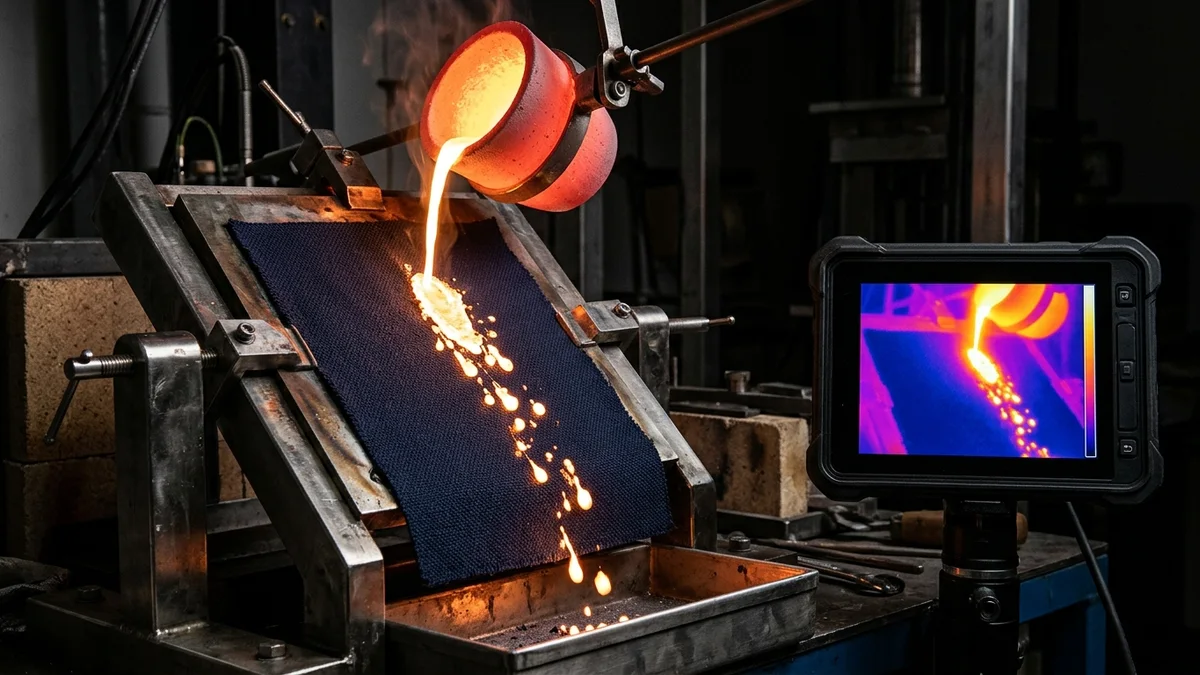
Permanent Bead-Off & Thermal Verification After 50 Washes
In EN ISO 9185:2007 molten pour tests conducted after 50 EN ISO 15797 industrial wash cycles, inherent MARLAN PLUS continues to shed liquid metal cleanly while keeping back-surface skin sensor temperatures safely below burn thresholds.
5. Korgan Foundry Suit and Detachable Hood (350 g/m², D3 / E3)
Traditional foundry garments (thick leather aprons or heavy aluminized suits) weigh 800–1000 g/m², pushing operators to the verge of heat exhaustion.
The Korgan Suit revolutionizes foundry ergonomics with its nominal 350 g/m² single-layer lightweight construction:
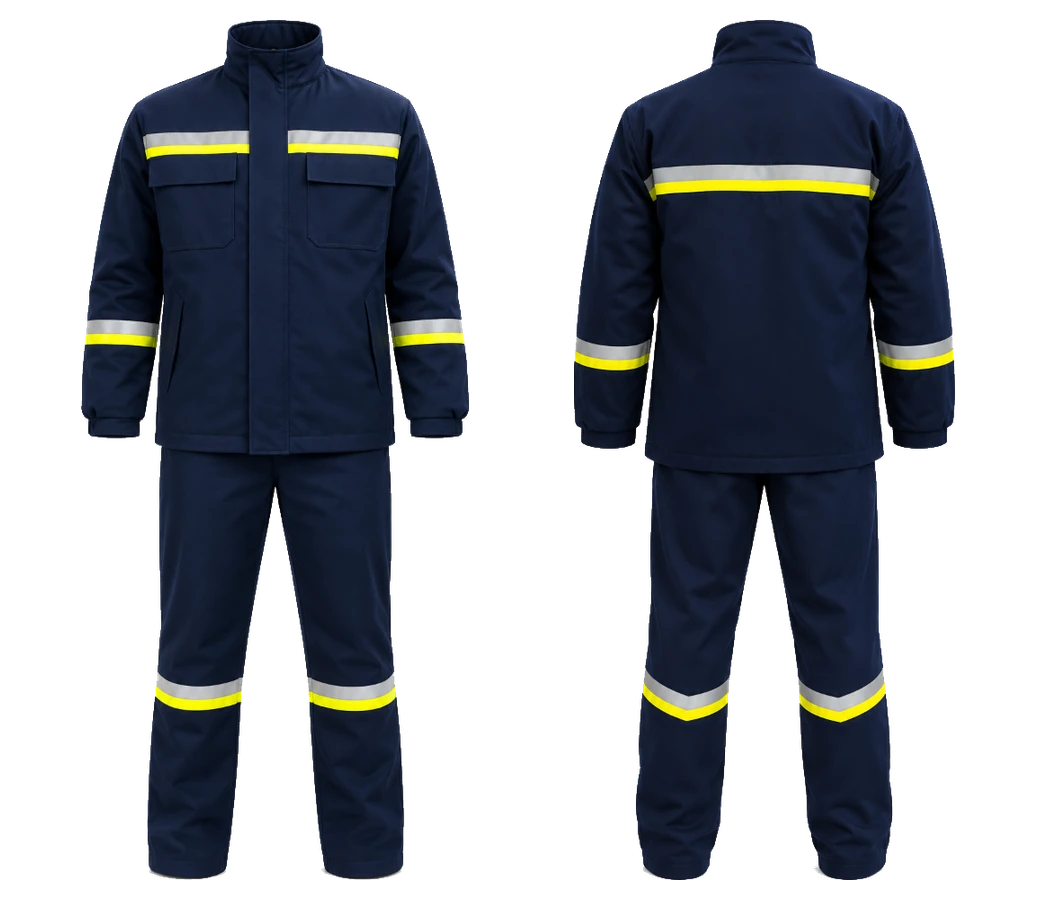
Korgan Molten Metal Protective Suit & Hood
Jacket, trousers, and stand-up-collar hook-and-loop 350 g/m² protective hood ensemble. Certified to both D3 (≥350g Al) and E3 (≥200g Fe) in a single-layer 350 g/m² fabric, > 100 g molten cryolite resistant, secondary open-arc ATPV 9.0 cal/cm² rated, compliant with EN 1149-2:1997 (1.78 × 10⁸ Ω) & EN 1149-5 antistatic and EN ISO 20471 FR strip / EN 17353:2020 Type B2 visibility.
6. Molten Extreme Heavy Foundry Coat (C2 Radiant Heat Protection)
Operators smelting at furnace fronts, skimming slag, or handling ladles face not only splash risks, but also prolonged exposure to intense infrared radiant heat (Class C Heat).
For these extreme conditions, the Molten Extreme Coat was engineered:

Molten Extreme Multi-Layer Foundry Coat (~615 g/m²)
Non-aluminized 3-layer system certified by AITEX 0161 (Certificate 23/5783/00/0161): 350 g/m² non-stick outer shell, 150 g/m² meta-aramid needle-punched felt thermal barrier, and 115 g/m² inner lining. Certified to EN ISO 11612 C2 radiant heat (RHTI₂₄ = 37.4 s), EN ISO 20471 FR strip / EN 17353:2020 Type B2 visibility, and EN 1149-2/5 antistatic standards.
The coat's most critical safety feature is its Quick-Release single-motion emergency front storm flap and EN ISO 11612 Clause 4.2 Trap-Free geometry. In an unexpected emergency, the operator can shed the coat in seconds, and the outer shell features zero exterior pockets or upward-facing folds where liquid metal could pool.
Frequently Asked Questions (FAQ)
Why can't aramid (Nomex/Kevlar) fabrics be used against molten aluminum splashes?
How do non-stick fiber physics and the 'Bead-Off' effect work?
What do the D3 and E3 classes represent under the ISO 9185 standard?
Select the Right Protective Suit for Your Foundry's Metal Type
Review our fabric pour test reports for aluminum, iron, or copper alloys smelted in your facility and build your technical specification with our engineering team.
Request Foundry Samples & Consultation →