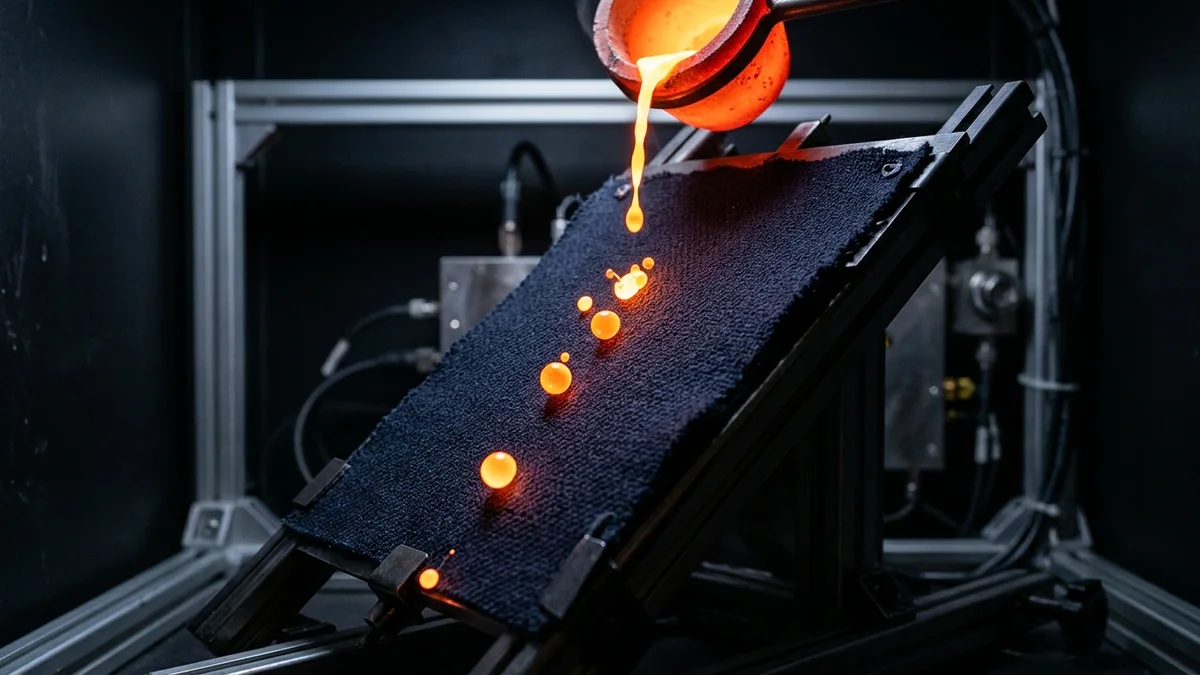
You open the door of an electrical distribution switchboard. You are about to take a voltage measurement with a multimeter, or simply inspect the temperature or torque of a busbar connection. At that moment, the task feels like routine maintenance—and the hazard often fades into the background.
The most sobering reality of electric arc flash incidents is this: The explosion lasts far less than a second (typically 50 to 200 milliseconds), yet the limb and tissue damage it leaves behind can last a lifetime.
When field investigations and accident reports are examined, it is no coincidence that electricians' hands are almost always the first body part injured. It is the inevitable consequence of plasma physics, working geometry, and human biomechanics.
1. What Are Incident Energy and the Arc Flash Boundary?
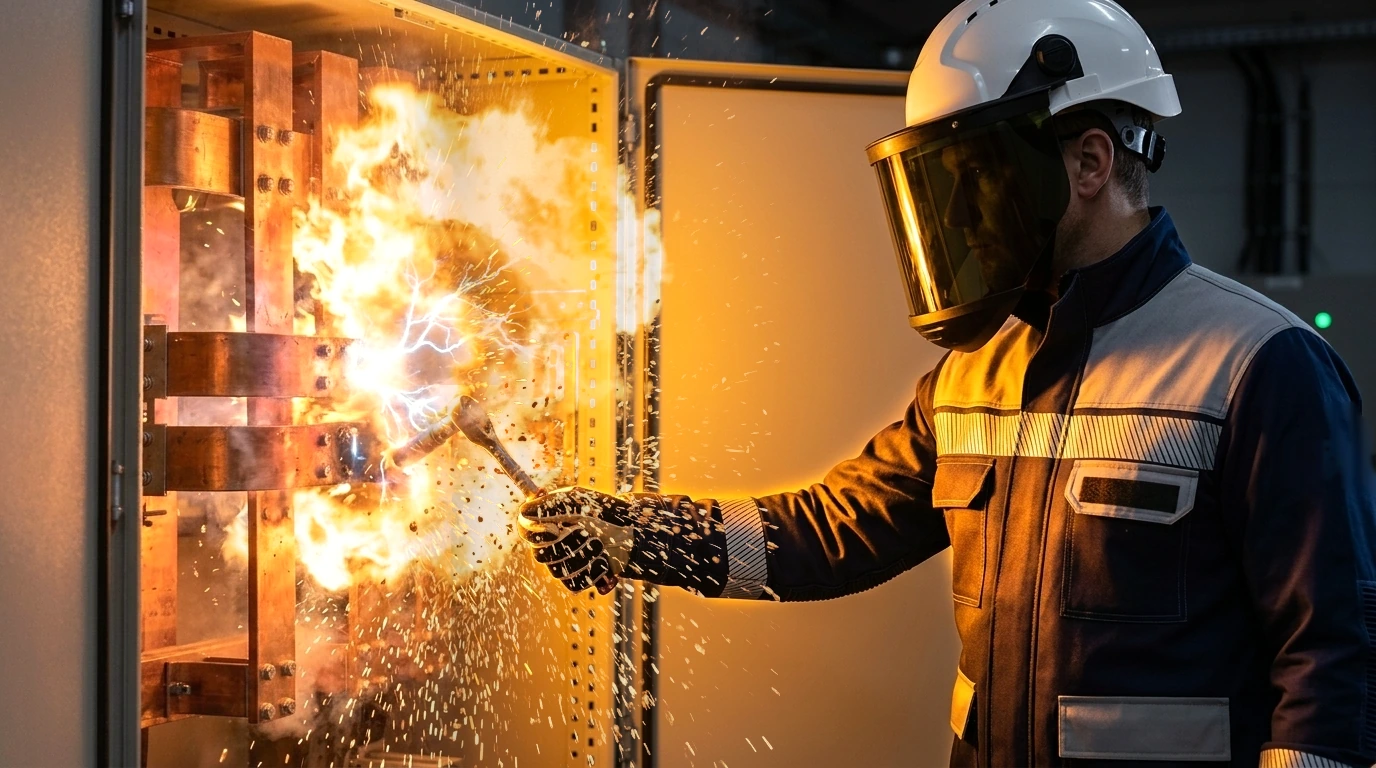
The fundamental engineering metric in electric arc flash risk management is incident energy. This value represents the thermal energy transferred per unit square centimeter at a specific working distance and is expressed in international literature in cal/cm² (calories per square centimeter).
The Arc Flash Boundary is the distance from the arc source at which incident energy drops to exactly 1.2 cal/cm². Every piece of clothing, face shield, and glove worn by personnel entering this boundary must hold an Arc-Rated certification equal to or greater than the calculated cal/cm² value at their working distance.
2. Working Posture and Hand Exposure (NIOSH Statistics)
It is no coincidence that electric arc flash accidents occur far more frequently in low-voltage (0.4 kV / 400V) distribution panels during routine maintenance than on high-voltage transmission lines.
During work, the panel door is opened, multimeter probes are extended toward busbars, or terminal bolts are torqued. In this geometry, the organ closest to the arc fault epicenter is invariably the worker's hand. While the torso stands 45–60 cm away, the hands and fingers operate merely 5 to 15 cm from the arc source!
In heat transfer physics, radiant energy is inversely proportional to the square of the distance (1/r² inverse-square law). Consequently, in an arc flash where 8 cal/cm² impacts the torso, the thermal energy striking a hand 10 cm from the source skyrockets to 40–100 cal/cm²!

3. Physics of Time: Arc Flash Duration vs. Human Reflex Time
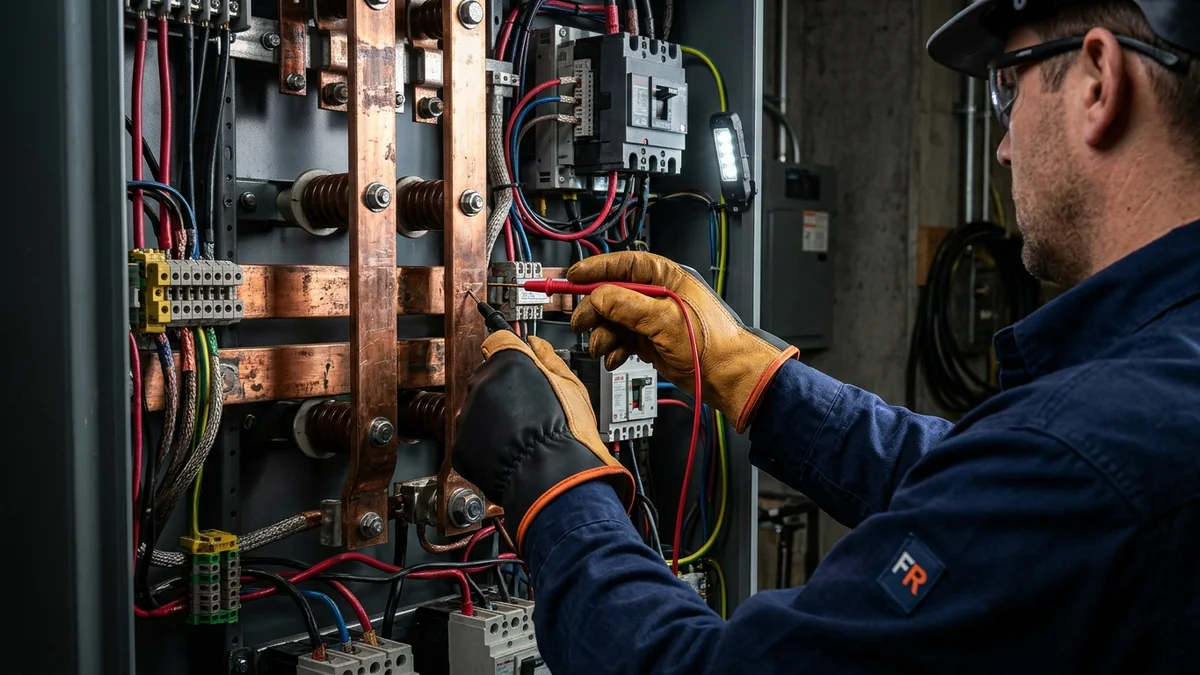
Many technicians fall into the trap of thinking, "If an arc starts, I'll pull my hand back immediately." Yet neurobiology and the laws of physics definitively refute this belief:
4. The 3 Primary Propagation Mechanisms of Electric Arc Energy
An arc flash is not an ordinary fire. It is a miniature simulation of a lightning strike inside an enclosed metal cabinet. Energy is transferred to the surroundings through three destructive mechanisms:
A plasma core 4 times hotter than the sun's surface emits infrared photons at the speed of light.
Solid copper busbars vaporize instantaneously, expanding 67,000 times in volume and creating a blast shockwave.
1085°C molten copper and aluminum droplets are propelled at ballistic velocity directly onto the glove.
5. Injury Distribution: Why Do Hands and Fingers Rank First at 45%?
When injury locations among personnel exposed to electric arc flash are examined in International Labour Organization (ILO) and US NIOSH accident reports, a striking distribution emerges:
| Body Region | Injury Probability | Primary Cause | Risk Severity |
|---|---|---|---|
| Hands & Fingers | ~ 45% | Closest extremity to arc epicenter (10 cm), tool-gripping posture | MOST CRITICAL |
| Face & Eyes | ~ 30% | Direct line of sight into panel, helmet worn without arc visor | HIGH |
| Forearms & Chest | ~ 20% | Flame trapping in sleeves, ignition of synthetic workwear | MEDIUM-HIGH |
As shown above, hands and fingers account for nearly half of all injuries in electrical arc accidents. Moreover, hands, face, and forearms are typically injured simultaneously during the same blast.
6. Not Mortality, But Permanent Loss of Function and Livelihood (Morbidity)
There is a widespread public perception that electrical accidents only cause death via "electric shock stopping the heart." In reality, the primary outcome in arc flash incidents is not mortality (death), but morbidity (permanent disability and loss of livelihood).
Hand anatomy is extraordinarily delicate: finger skin is thin, subcutaneous fat is minimal, and tendons, nerves, and joint capsules lie directly beneath the surface.
- Tendon Adhesion: Deep burns desiccate flexor and extensor tendons, permanently locking the ability to open and close the fingers.
- Loss of Fine Motor Skills: The technician can never again grip a screwdriver, tighten a terminal screw, or strip precision wiring.
- Months of Rehabilitation: Skin graft surgeries, contracture release operations, and permanently painful scar tissue (keloids).
7. Critical Misconception: Why Don't Electrical Insulating Gloves Protect Against Arc Flash?
The deadliest misconception in the field is: "I am wearing 1000V or 36 kV rubber insulating gloves, nothing will happen to me."
The sole purpose of EN 60903 rubber gloves is to prevent electric current from flowing through the body (shock). In an arc flash, however, current does not flow through the body; instead, 19,000°C heat and flame radiate from atmospheric plasma. Standard rubber gloves ignite, melt in an arc flash, and molten latex literally solders itself onto the technician's skin!
Two distinct international test standards govern these two separate hazards:
| Attribute | Electrical Insulating Glove (EN 60903) | Arc Flash Protective Glove (ASTM F2675 / EN 61482) |
|---|---|---|
| Target Hazard | Electric shock / Contact current (Shock) | Thermal plasma, molten metal shrapnel, radiant heat (Arc Flash) |
| Primary Metric | Voltage rating (Class 00: 500V, Class 0: 1000V...) | ATPV / ELIM arc thermal rating (cal/cm²) and APC Class |
| Base Material | Natural latex rubber | Para-aramid, polychloroprene composite, treated leather |
| Behavior Under Arc | Ignites, melts, and adheres to skin | Carbonizes, resists break-open, and blocks thermal flux |

AITEX (0161) Laboratory Verification: Carbonization vs. Melting
Exposed to an 8 kA open-arc plasma discharge under ASTM F2675, ArSafe's outer polychloroprene/aramid shield carbonizes without afterflame to block heat transfer, exhibiting zero break-open or melting on the inner liner.
8. The Practical 2-Question Rule for the Field
We can distill complex regulations into 2 fundamental questions that field personnel can answer quickly before starting work:
If Yes: EN 60903 Rubber Insulating Gloves are mandatory. However, an arc-rated leather/composite protector must be worn over them.
If Yes: Wearing an ASTM F2675 and EN 61482-1-2 APC 2 certified arc flash glove (ArSafe) is mandatory. If your panel lacks an incident energy label, compute your real-time cal/cm² and working distance via our in-house ArcSim Arc Energy Simulator (arcsim.info/en/) ↗.
9. Engineering Solution: ArSafe APC 2 Asymmetrical Arc Flash Protective Glove
The biggest drawback of traditional arc flash gloves was bulkiness. To protect hands up to 40–50 cal, manufacturers built stiff, welding-style mittens; because electricians could not hold small screws with them, they removed the gloves and worked barehanded!
ArSafe engineering solved this ergonomic dilemma. By analyzing tool-grip biomechanics inside switchgear panels, our engineers developed the Asymmetrical Thermal Protection concept:

ArSafe APC 2 Electric Arc Flash Protective Glove
Turkey's first high-performance arc flash glove certified at AITEX (0161) laboratories via both open-arc testing (ASTM F2675 / IEC 61482-1-1) and box testing (EN 61482-1-2 APC 2), under Universal (2163) Module D quality assurance.
While gripping a tool, the technician's palm is physically shadowed by the insulated handle of the screwdriver. In contrast, the back of the hand (dorsal surface) directly faces the explosion epicenter. ArSafe equips the back of the hand with a 125.3 cal/cm² polychloroprene para-aramid shield while keeping the palm at a supple 28.1 cal/cm²—delivering both extreme thermal protection and uncompromised grip dexterity simultaneously.
Frequently Asked Questions (FAQ)
Why are hands the first organ exposed in an electric arc flash explosion?
Do rubber insulating (dielectric) gloves protect against electric arc flash?
What do Incident Energy and the 1.2 cal/cm² threshold mean?
Why does the ArSafe glove feature such a high 125.3 cal/cm² rating on the back of the hand?
Let's Determine Your Facility's Arc Risk Level Together
Configure the right hand and body protective equipment combination with our engineers based on incident energy calculated from your switchgear short-circuit currents and breaker clearing times.
Request Free Engineering Consultation →