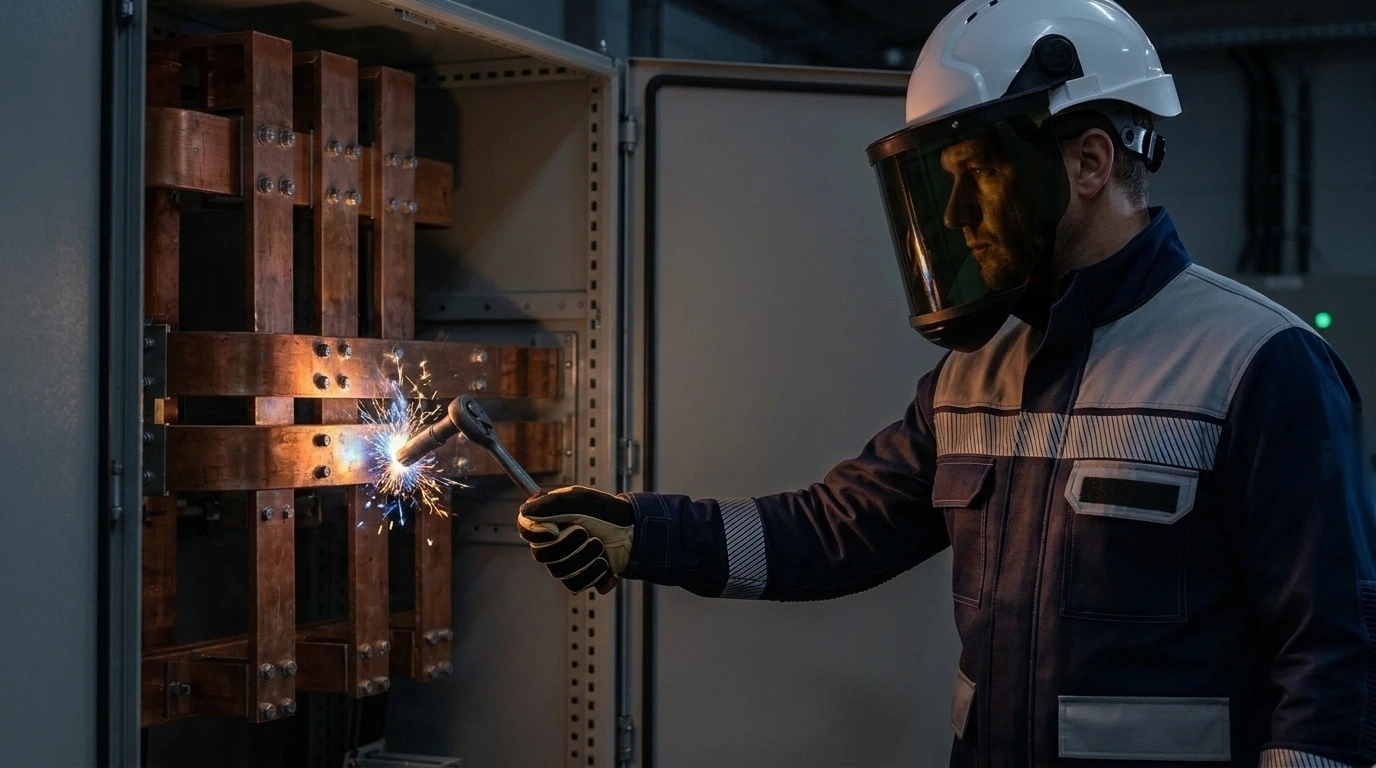
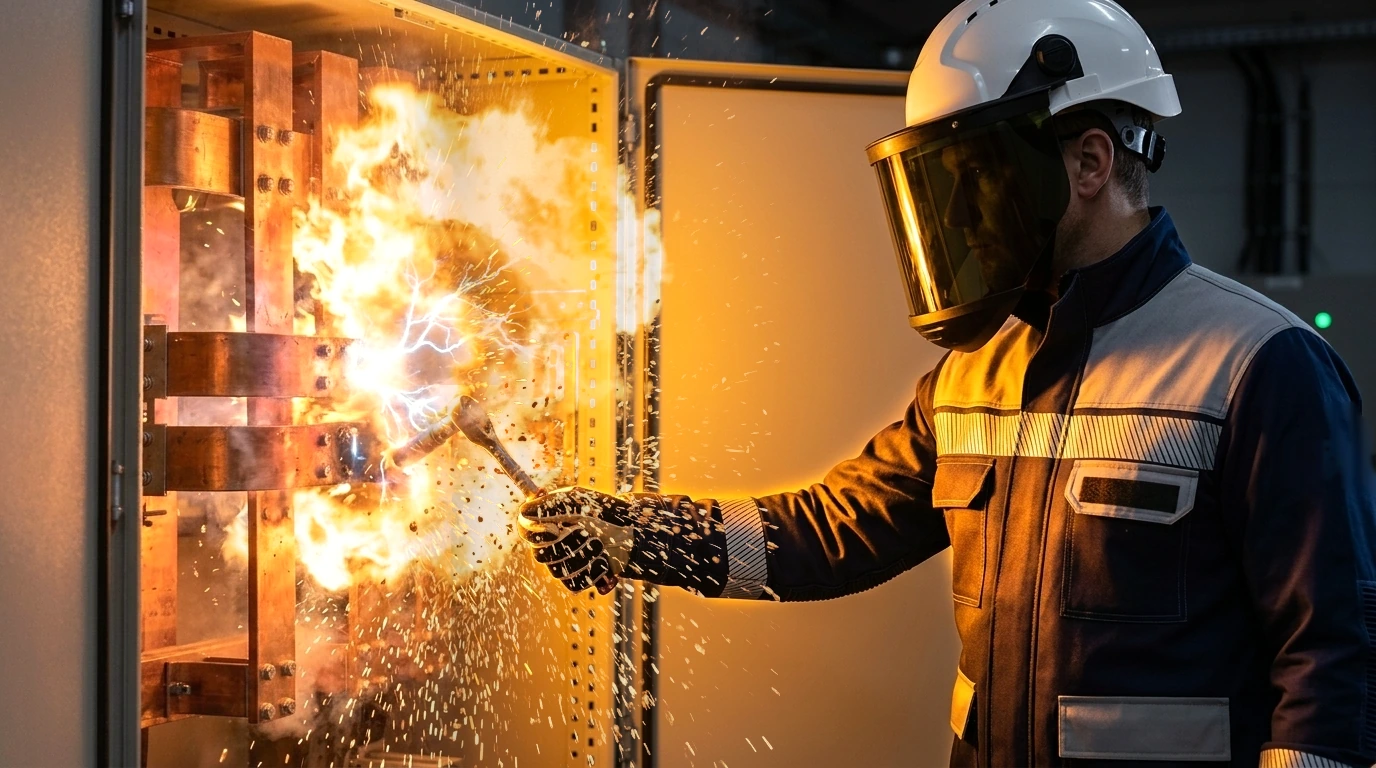
1. Test Methodology and Open-Arc Standard: Protective gloves shall be tested and certified in strict accordance with ASTM F2675 / F2675M (Standard Test Method for Determining Arc Ratings of Hand Protective Products). The dorsal (back-of-hand) Arc Thermal Performance Value (ATPV) shall be at least 120 cal/cm² (with an authoritative target of 125.3 cal/cm²). The palmar ATPV shall be at least 25 cal/cm² (target: 28.1 cal/cm²), engineered to preserve operational dexterity without compromising thermal safety.
2. Directed Arc Box Test Classification: The glove shall meet or exceed Arc Protection Class 2 (APC 2) per EN 61482-1-2 / IEC 61482-1-2 box test methodology under a prospective short-circuit current of 7 kA with an arc duration of 0.5 seconds.
3. Material Architecture & Thread Integrity: The dorsal aspect shall be fabricated from a polychloroprene-coated para-aramid technical composite textile engineered for non-melting, non-dripping performance under high radiant heat flux and instantaneous plasma exposure. The palmar aspect shall be constructed from premium top-grain bovine leather pre-curved for ergonomic tool control. All structural seams shall be assembled using 100% flame-resistant para-aramid industrial thread.
4. Mechanical & Thermal Performance Classifications: The glove envelope shall achieve at least 3112X under EN 388:2016+A1:2018 (Abrasion Level 3, Cut Level 1, Tear Level 1, Puncture Level 2, ISO Cut X) and at least 4X2XXX under EN 407:2020 (Limited Flame Spread Level 4, Convective Heat Level 2).
5. Regulatory Compliance & Category III Certification: The product shall be classified as Category III Personal Protective Equipment under Regulation (EU) 2016/425 (complex design against mortal danger and irreversible harm) and shall possess a valid EU Type-Examination Certificate issued by an accredited European Notified Body (AITEX CE 0161). An official EU Declaration of Conformity (DoC) and comprehensive user instructions shall accompany all deliveries.
6. Dielectric Compatibility & Sizing Range: The glove shall be fully compatible as an outer protective layer over EN 60903 / ASTM D120 Class 00, 0, 1, and 2 dielectric rubber insulating gloves per OSHA 1910.269 and ASTM F696 guidelines. The product line shall offer at least five standardized sizes: 9 (S), 10 (M), 11 (L), 12 (XL), and 13 (XXL), engineered with 280–330 mm gauntlet cuff lengths (Size 9–10: 280–300 mm, Size 11–13: 310–330 mm) to preserve mandatory clear dielectric flashover distance over 360/410 mm rubber insulating gloves.
7. Utility Grid Compliance & Field Evaluation Samples: The glove shall satisfy all technical evaluation criteria established by major electrical distribution system operators (DSOs) and transmission authorities. The supplier shall provide certified test certificates and evaluation sample pairs upon request for corporate EHS technical review.
8. Biomechanical & Clinical Rationale (ASSH & Histological Conformance): The glove architecture shall conform to the clinical burn principles established by the American Society for Surgery of the Hand (ASSH) Upper Extremity Burn Guidelines (stipulating that arc flash and radiant thermal injuries predominantly target the dorsal aspect of the hand), the 200–250 ms startle reflex defensive forearm pronation dynamic, and tool-grip shadowing biomechanics. To safeguard the vulnerable ~0.1 mm dorsal epidermis and superficial extensor tendons from full-thickness necrosis and escharotomy, the dorsal aspect shall deliver at least 120 cal/cm² (authoritative target: 125.3 cal/cm²) composite armor; while the naturally resilient palmar aspect, protected by a thick stratum corneum and tool shadowing, shall provide at least 25 cal/cm² (target: 28.1 cal/cm²) natural leather to ensure maximum operational dexterity.